
Arthur Machen's London
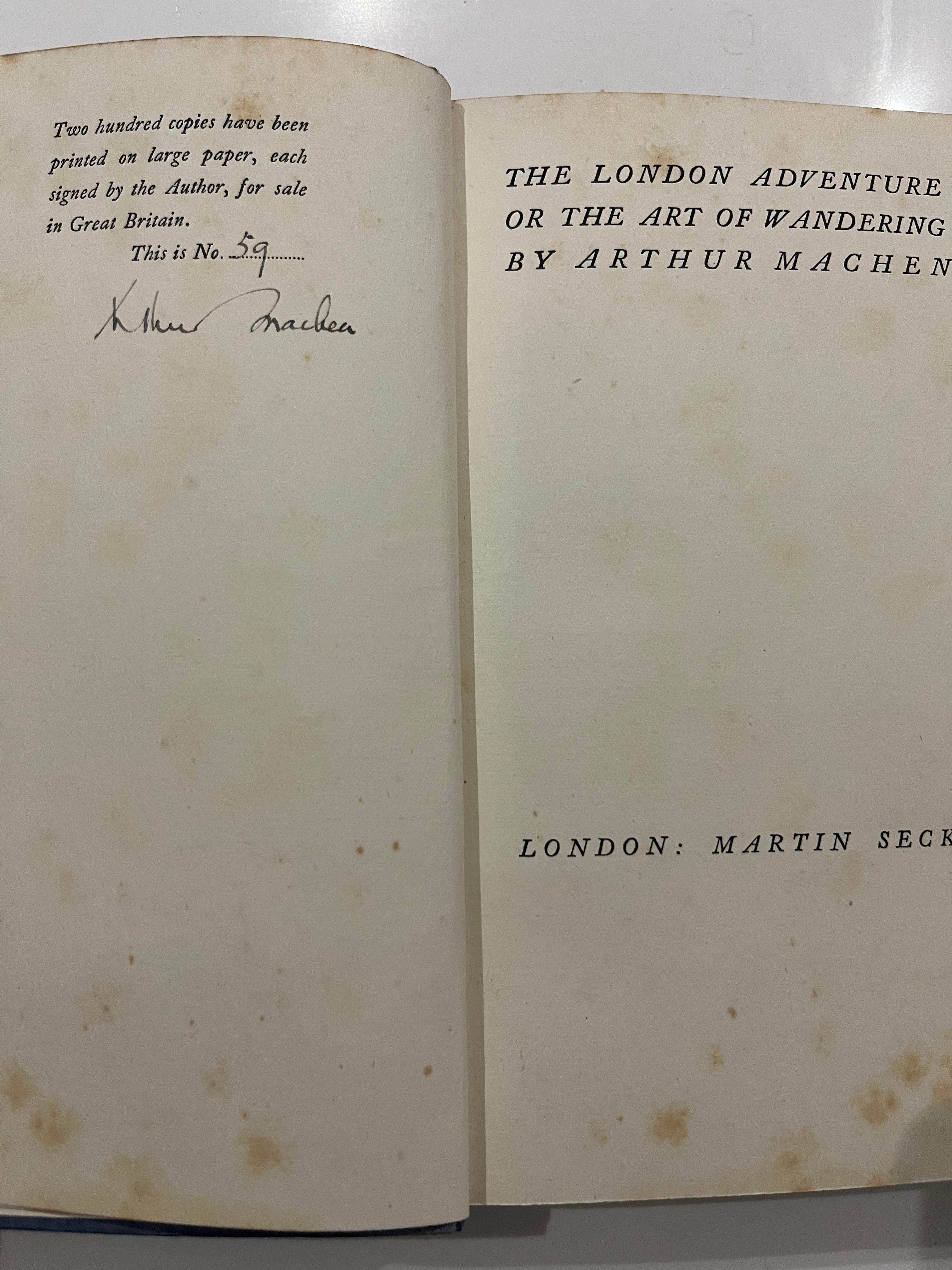
The London Adventure or The Art of Wandering (1924)

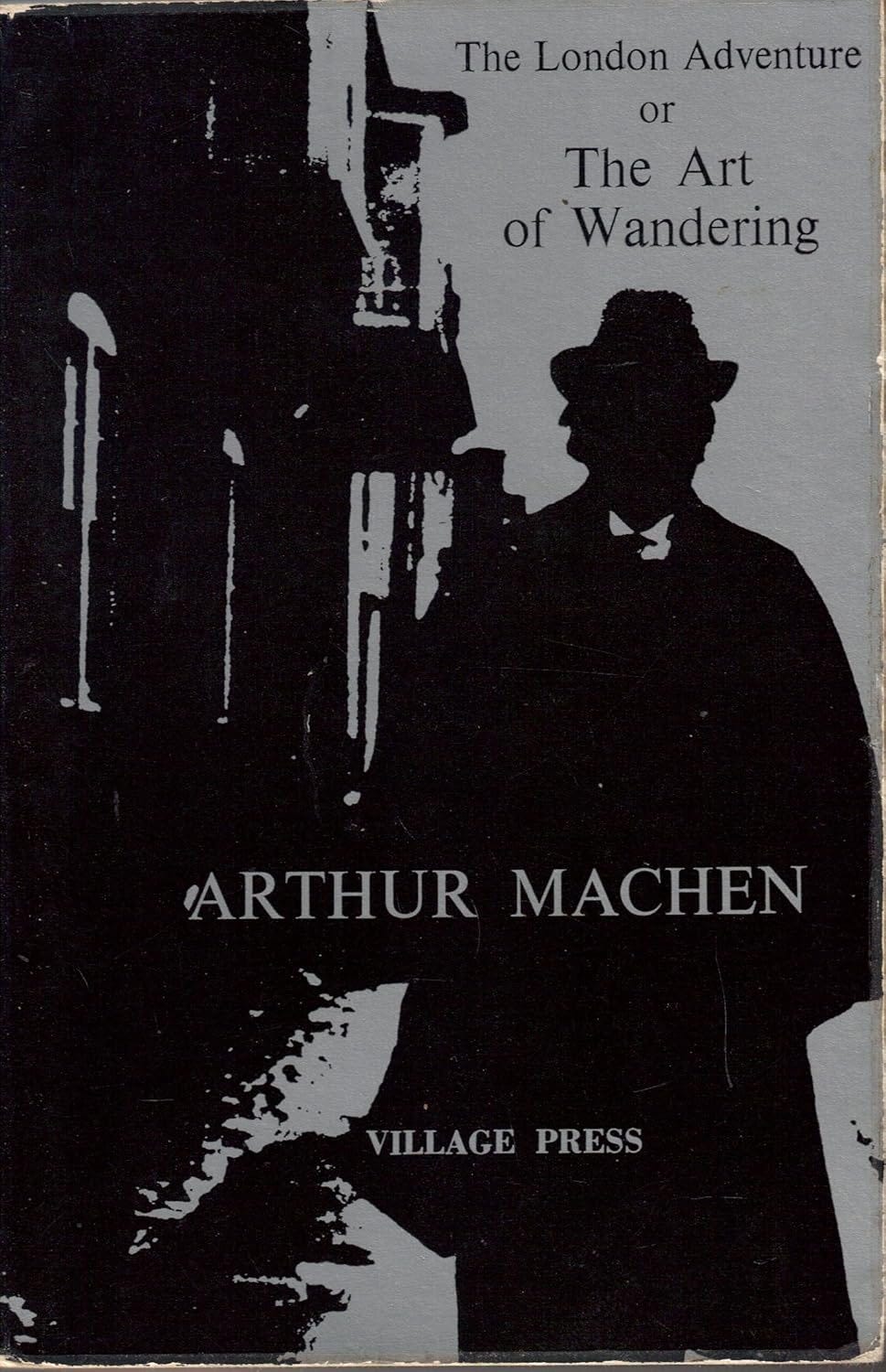
Exploring the ‘raw, red places all around the walls of London....the grim greyness of the streets’ The London Adventure or The Art of Wondering (1924) - the third in a loose autobiographical trio that started with Far Off Things (1922) - is a lyrical, meandering hymnal to the lesser trodden metropolis, or, as he memorably terms it: London Incognita.
Taking in Masonic lore, peculiar hidden pubs, the drab prosaic horror of new build suburbs, trees that evoke dread and wonder; crumbling churches and the food, drink and cultural morays of lesser travelled Holloway backstreets (he has a real thing for Holloway and Camden Town), The London Adventure is also a (perhaps, the) foundational work of early psychogeography, less working guidebook in the mode of, say, The London Nobody Knows by Geoffrey Fletcher (1962) or Len Deighton’s London Dossier (1967) and more akin to the playful, verbose, cog twisting world of Iain Sinclair’s London Orbital (2002) (and on which Machen’s London Adventure was a firm influence)


In his speculative fiction Machen, of course, played with geography and the soul of place, conjuring worlds both domestically cramped - creaking Victorian boarding houses, reeking pubs, teetering shops - and often juxtaposing them with the sweeping beauty, dread and mystery of the pastoral- the Welsh hills and valleys of his birthplace in Monmouthshire, in paticular. Novels such as The Hill of Dreams (1907) or The Great God Pan (1894) were rich in such imagery, layering tension with hallucinatory imagery to great effect.
A foundational influence on early - mid twentieth century American weird fiction, horror and fantasy (not least the likes of H.P. Lovecraft, Robert E. Howard and Clark Ashton Smith), Machen was also a journalist in his early career, and The London Adventure frequently references his experiences navigating the dank, foggy Victorian streets to attend to any number of bizarre incidents and peculiar characters.


An early anecdote places us firmly in Machen territory. He describes an interview conducted with a brass founder for, as he breezily tells us, an assignment regarding a poltergeist. On Matchen asking whether brass is still cast ‘in the old way?’ The worker responds that, yes, it is cast as it has always been cast (that is ‘…as it were when the columns of brass were made gloriously for the Temple of King Solomon’) Immediately recognising somewhat unsubtle Masonic code, Machen responds that he does indeed know the name of ‘the man that did that casting’ to which the brass founder fixes him with a stare and asks outright whether Machen himself is ‘of the square’.
What follows is a gloriously eccentric few pages that spiral, in fleet footed prose - studious and unfiltered; verbose to the point of comedy; mildly snobbish- around the topic of late nineteenth century Freemasonry; specifically his concern that while arcane rituals are still performed in the ‘rawest, reddest modern suburb…these vile red stones transformed into living philosophical stones’ how disappointing that the majority of modern practitioners are sorely under read in the arcane mystery roots of their solemn practice.
His train of thought is monetarily derailed by a full five pages on the imagined daily labour, domestic routine and diet of an imagined family who, he posits, may inhabit one of the modest Camden Town/Holloway borderland townhouses near to where he is interviewing the brassfather, going into evocative detail as he plots the ‘eggs but no bacon’ and cake and wine that is ‘apt to get somewhat dry and flat and weary’ before he, finally, reaches a treatise on the unknowable ways of poltergeists, nonchalantly asking a clergyman whether he actually saw the ‘ashtray - or whatever it was - shoot off of the mantelpiece’ (to which the clergyman responds ‘do you see the ball at Lord’s all through its course, from the moment that it touches the bat to the moment it touches the ground?’)
This is typical of Machen: a free flowing meander that takes in arcane knowledge, a profound fascination with everyday routine and a peculiar encounter leading to the uncovering of a potentially dangerous or sinister mystery. Every facet of his fiction, then, is also laid bare in his journalese: that precise sense of the fantastic, tempered by mildly cynical yet open intellect, a willingness to lift the veil but not flail wildly at what lies underneath - this is what permeates The London Adventure.
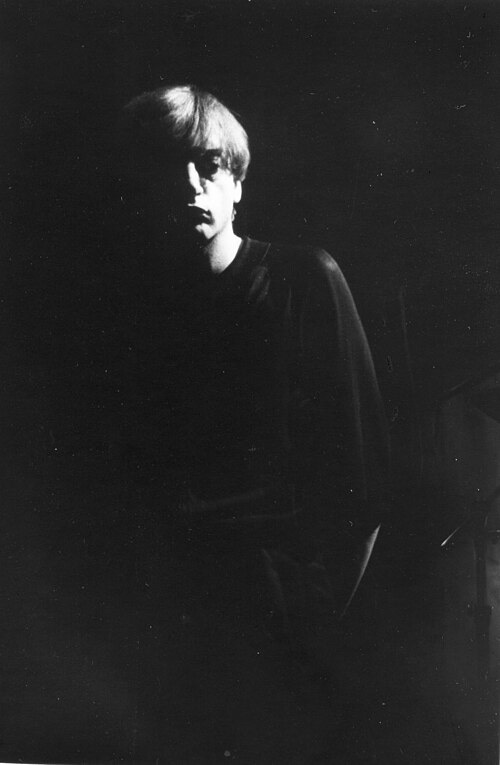
It’s an aesthetic sentiment he shares with one of his most well known acolytes, the late Fall vocalist and lyricist Mark E. Smith. A long standing member of the Machen Society, Smith took lyrical inspiration from Machen; specifically the idea that it is so often the odder corners of the everyday, rather than the camper, more grandiose horrors of the more purple literary imaginations - that pierce through. As he put it in his (recommended) memoir Renegade (2008)
‘‘The society’s monthly newsletters included excerpts from Machen’s unpublished diaries, the source of much of his work. It’s like another world..he goes to all these places, like, ‘this is where the working class hang out, this is where the dandies hang out… I went in this pub, a bloke comes in with a knife in his back’…the real occult’s in the pubs of the East End. In the stinking boats of the Thames, not in Egypt. It’s on your doorstep mate. Strikes a chord with me”
Indeed, the scale of the ‘doorstep’ as painted in A London Adventure feels near impenetrable; the vastness and mystery of the teeming 1920’s metropolis a living entity that, by dent of its nature and scale, is unknowable in the round.
At one point Machen recollects interviewing a fireman in Wandsworth, talking of the bravery and steadfast sacrifice of his profession etc etc, before stopping to express a more honest interest and awe at the scale of Wandsworth itself; how it appears infinite; how he could traverse unknown and ‘unconjunctured regions’ at the end of any street in the area; and how that relates to early childhood memories of the terrible December rains and the ‘dread, threatening, druidical rocks…forever and ever, amen…it sounds farcical that I could read something of this into a little expedition to find a fireman in his little villa beyond Wimbledon Common’
Not all is mystery, of course. Machen is wonderfully acidic in a stinging, prescient passage on the formulaic approach of the outer London boroughs of the time re: urban planning, bemoaning the lack care and attention and facilities, in a way that recalls remarkably similar articles on under-serviced new builds and estates in the present day. He describes a forlorn unfinished development of half a dozen houses put up in 1860 in Enfield Wash, flanked by cabbage patches, and imagines a cornershop ready to service untold hundreds in ‘pickles, tea, cooked meat and candles’ before morosely reflecting that ‘Alas! There was a corner….and nothing but a corner’
But though brilliantly verbose and perceptive, one also gets the sense that Machen wasn’t above poking fun at himself. At one point he relays a conversation he had with a friend about Edgar Allen Poe (by proxy himself, of course…)
‘Yes’ he said ‘Edgar Allen Poe is wonderful, amazing; there has never been anyone like him. But, somehow, one is, now and then, inclined to laugh’